In short: a useful supplier audit answers three questions — does the factory actually exist and make this product, can its quality system reproduce the sample you approved, and will it still be there in five years. This checklist covers what to verify on-site or through a third-party inspector, which documents to request before wiring a deposit, and the questions that quickly separate real factories from resellers.
We publish this knowing exactly what it invites: buyers auditing us with our own checklist. That is the point. A supplier who helps you audit harder is telling you something; so is one who changes the subject.
Before you fly: four documents to request
- Business license — check the registered scope includes manufacturing, not only trading. Cross-check the registered address against where they claim the factory is.
- ISO 9001 certificate — verify the holder name, scope and expiry on the certification body’s own website, not just the PDF.
- Test reports — salt spray (48–96 h is a healthy range for plated wire), load cycle tests for runners, material certs for stainless lines. Reports should be recent and name the actual product family.
- Export record — ask which markets they ship to and for a redacted bill of lading or two. Consistent exports to your region means logistics and compliance are already solved.
On the factory floor: what actually matters
You are not there to admire machines. Walk the flow in production order and check four things:
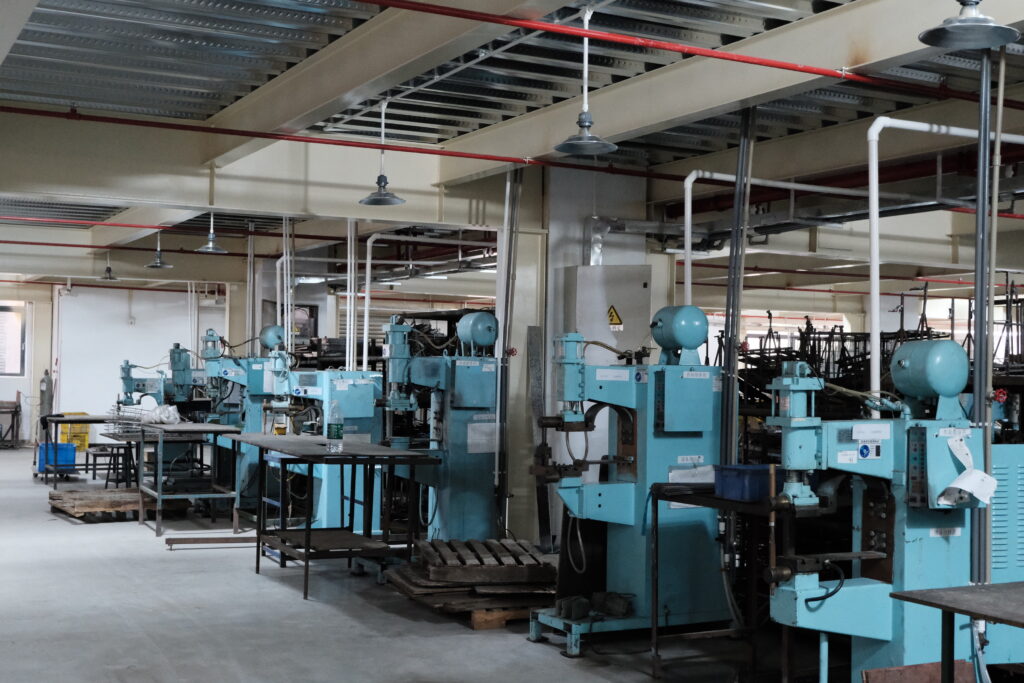
- Wire forming and welding in-house? If bending and welding happen on site, you are in a factory. If goods arrive semi-finished and only get packed, you are in a warehouse with a showroom.
- Surface treatment — the quality maker. Ask to see the plating or coating line. In-house surface treatment means the supplier controls the single biggest corrosion variable; outsourced plating means quality depends on someone you never meet.
- QC stations with records. Look for written inspection sheets at incoming material, mid-process and final packing — not a lone poster that says Quality First.
- Consistency between what you see and what you were sold. If the catalog shows 100+ SKUs but the floor only runs one product, the rest is sourced elsewhere. Not necessarily a dealbreaker — but you deserve to know what is made here versus bought in.
Questions that separate factories from resellers
- “Can we change the wire gauge on this model?” A factory answers with a cost and a minimum quantity. A reseller answers with “let me check”.
- “Where does plating happen?” Watch whether the answer is a place on this site or a company you have never heard of.
- “How fast can you sample a modified version?” A factory quotes a process; a middleman must relay the question.
- “What failed your QC last month?” A real quality system has real rejects and can describe them. A perfect record is a missing record.
If you cannot visit: the third-party route
A factory audit through SGS, BV, TÜV or Intertek follows a standard scheme at modest cost. Combine it with a pre-shipment inspection on your first two orders — including XRF spot-checks if you buy stainless — and you have replicated most of the value of a personal visit. Any supplier who resists third-party inspection has answered your real question.
FAQ
How long does a proper factory audit take?
Half a day on site for a hardware factory of typical size — production walk-through, document review, and QC record sampling. A rushed one-hour tour is a showroom visit, not an audit.
Is a trading company always a bad choice?
No — good trading companies add sourcing breadth and export handling. The problem is a trader priced as a trader but presented as a factory. Ask directly; judge the honesty of the answer.
What does a third-party audit cost?
Standard factory audits from major inspection firms are a few hundred US dollars plus travel; pre-shipment inspections are similar. Cheap insurance against a five-figure order going wrong.
Can we audit SOWELLE's production base?
Yes — qualified B2B buyers are welcome to visit or send a third-party inspector to our family-owned, ISO 9001 certified production base in Zhongshan. Contact us to arrange it.
What is the single biggest red flag?
Reluctance around documents. Every legitimate factory can produce its license, certificate and test reports within a day. Delay is data.
Related reading: inside our manufacturing process · 201 vs 304 stainless guide
Questions about a spec sheet or a size mix for your market? Contact us — we reply within 24 hours.