In short: with ODM you put your logo and packaging on a product the factory already engineers and produces — the fastest, cheapest way to launch a hardware line. With OEM the factory manufactures to your drawings and specifications — full control at higher minimums. Most private-label kitchen hardware brands start ODM, then move their best sellers to OEM once volumes justify it.
The two programs, side by side
| ODM (their design, your brand) | OEM (your design, their production) | |
|---|---|---|
| What you provide | Logo, packaging artwork, color/finish choices | Drawings or samples, full specification, packaging |
| What the factory provides | Existing engineered product + customization options | Manufacturing to spec, sampling against your drawings |
| Speed to first order | Fast — sampling in days from stock designs | Slower — sampling and approval cycles first |
| Quantity expectations | Lower — shares production runs with other buyers | Higher — dedicated setups must pay for themselves |
| Design ownership | Factory owns the base design | You bring the design; protect it with registration and an NNN agreement |
| Best for | Launching a line, testing a market, filling gaps | Differentiated hero products, registered designs |
What “customization” really includes under ODM
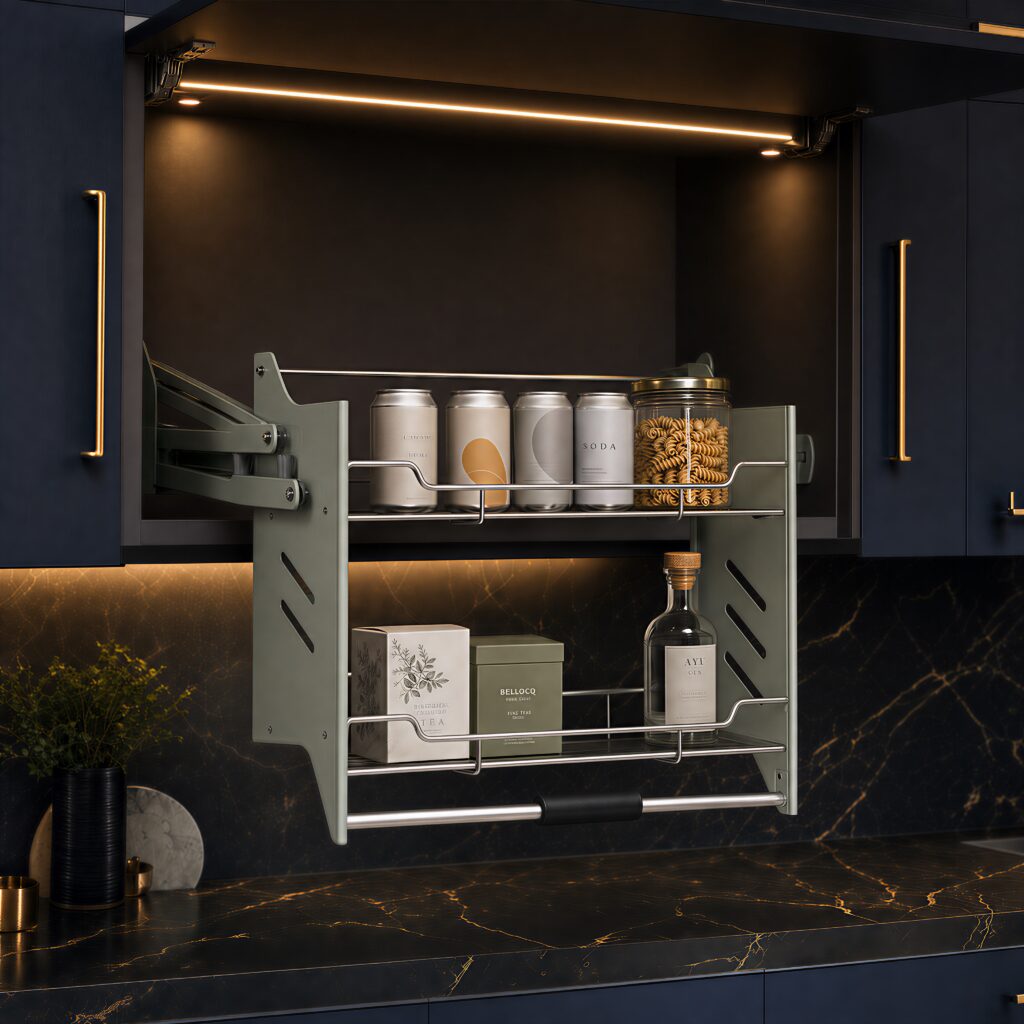
ODM is not take-it-or-leave-it. On wire storage products, factories routinely adjust within the existing engineering: surface finish and color (chrome, nano coating, spray colors), wire gauge upgrades, soft-close vs standard runners, logo on the basket or rail, and fully custom retail packaging. What stays fixed is the core geometry — because that is where the engineering investment lives.
When OEM is worth it — and the clause that matters
Move to OEM when a product carries your brand’s differentiation: a size the market lacks, a mechanism improvement, a design registered in your name. The clause to negotiate is exclusivity scope: define whether the factory may sell your design to others, in which markets, and for how long. We sign market-exclusivity terms for qualified OEM programs — put the scope in the contract, not in goodwill.
A realistic path for a new private-label brand
Season one: pick 8–12 ODM SKUs covering the volume categories (400/450 mm baskets, 600 mm drawer baskets, one corner solution), your finish and packaging. Season two: read the sales data. Season three: take the one or two proven winners OEM with a distinctive spec, keep the rest ODM. This sequences your investment into custom engineering only after the market has voted.
FAQ
Can we mix OEM and ODM in one order?
Yes, and most mature programs do — OEM hero items plus ODM catalog fillers in the same container keeps freight efficient.
How long does OEM sampling take?
It depends on the complexity of the modification — timelines are confirmed per project once drawings are finalized. ODM sampling from stock designs is measured in days.
Do you require a minimum for ODM logo and packaging?
Customization minimums vary by what changes — packaging-only is the lightest, finish changes need a production batch. Send your target quantities and we quote per option within 24 hours.
How do we protect a design we bring for OEM?
Register the design in your key markets first and sign an NNN agreement (not a generic NDA) with the factory. We sign market-exclusivity terms for qualified programs.
Is white-label the same as ODM?
In this industry the terms are used interchangeably — your brand on the factory's engineered product. The contract details matter more than the label.
Related: how to audit a supplier · basket size compatibility guide · browse the catalog
Questions about a spec sheet or a size mix for your market? Contact us — we reply within 24 hours.