In short: ISO 9001 certifies the factory’s quality system, not the product. Test reports from SGS, BV or TÜV certify a specific sample against a specific standard. LFGB, REACH and California Proposition 65 are market-access requirements that apply to materials and substances. Buyers routinely conflate all of these, and suppliers rarely correct them.
What each one actually proves
| Certificate | What it proves | What it does not prove |
|---|---|---|
| ISO 9001 | The factory runs a documented quality management system, audited by a certification body | Nothing about any individual product’s performance |
| SGS / BV / TÜV test report | That a specific sample passed a specific test on a specific date | That current production matches that sample |
| LFGB | Material suitability for food-contact use under German standards | Corrosion resistance or mechanical durability |
| REACH | Compliance with EU restrictions on hazardous substances | Product quality in any general sense |
| Prop 65 | California warning-label obligations regarding listed substances | That the product is unsafe or safe — it is a disclosure regime |
Which ones you actually need
Selling into the EU: REACH compliance for the materials and coatings. LFGB where the product is presented for food contact — relevant for dish racks and drainer components more than for a dry-goods basket.
Selling into the US: Prop 65 assessment if California is in scope, which for most national programmes it is. Chrome plating chemistry matters here — trivalent rather than hexavalent chromium is now the industry norm for decorative finishes.
Selling anywhere: an ISO 9001 certified supplier plus product test reports relevant to your use case. For plated wire, that means salt spray; for load-bearing systems, cycle testing.
How to verify a certificate is real
This takes two minutes and is worth doing every time:
- Check the certificate holder name matches the entity you are actually buying from — not an affiliate, not a trading arm.
- Check the scope covers the products you are buying, not an unrelated category.
- Check the expiry date, and verify the number on the certification body’s own website rather than trusting the PDF.
- For test reports, check the sample description and date. A report from four years ago on a product no longer in production tells you little.
Our position
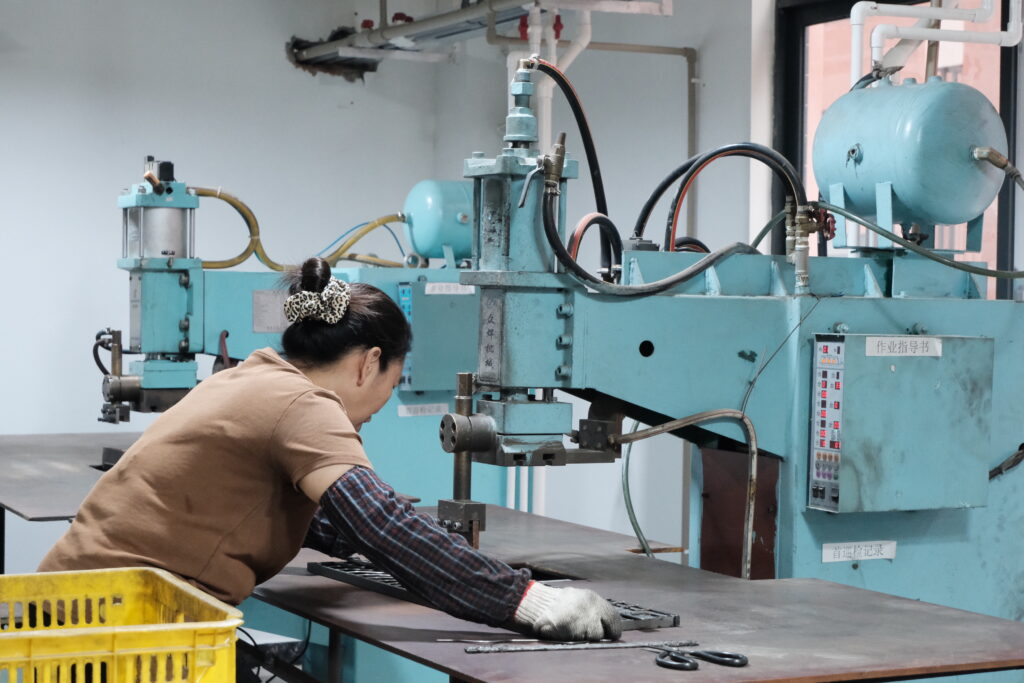
Production runs under an ISO 9001 certified quality system at our base in Zhongshan, with salt-spray sampling on plated batches and material documentation available on request. We would rather tell a buyer we do not hold a particular certificate than supply one that does not cover the goods being shipped — and we encourage buyers to verify everything we send. Our supplier audit checklist explains what to verify on site.
FAQ
Is ISO 9001 enough on its own?
No. It certifies that the factory has a quality management system, which is meaningful but says nothing about a specific product. Pair it with product test reports relevant to your application.
Do I need LFGB for kitchen baskets?
It depends on presentation and market. Dry-goods storage baskets are usually outside food-contact scope; dish racks and drainers that hold wet crockery are more likely to be in scope, particularly for German and EU retail buyers.
How do I check a certificate is not forged?
Verify the certificate number on the issuing body's own website, confirm the holder name matches your actual supplier, and check that the scope covers your product category. Never rely on the PDF alone.
What certification does SOWELLE hold?
Production runs under an ISO 9001 certified quality system, with test documentation available per product family on request. Buyers are welcome to verify the certificate directly with the issuing body.
Working on a specification or a quotation? Talk to our team — we reply within 24 hours, or request the full catalog.