
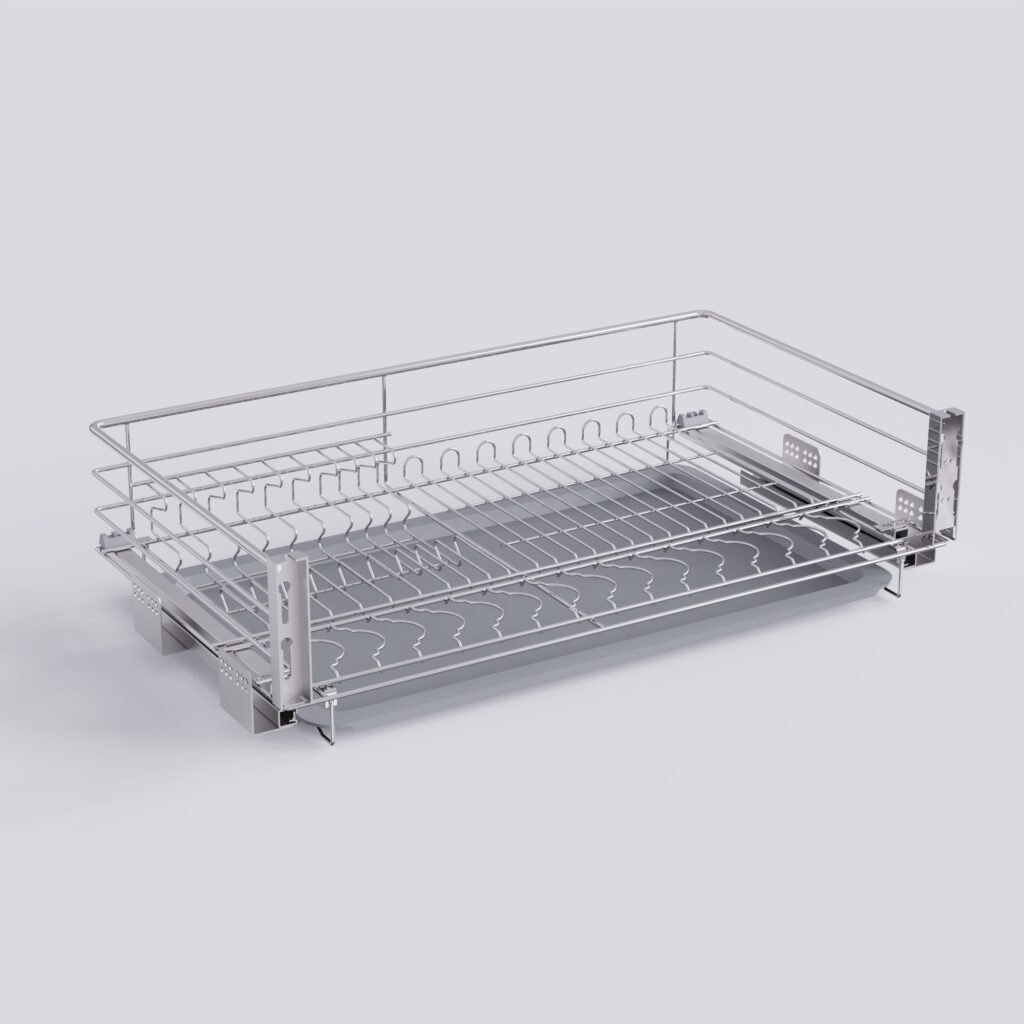
In short: classification, not the invoice value, decides your landed cost. Kitchen storage hardware can fall under several tariff headings depending on material and whether it is presented as furniture parts or as base-metal articles — and the duty attached to each differs by destination. Verify the classification with your own broker for every market, because rates and trade measures change more often than catalogues do.
We are a manufacturer, not a customs broker, so treat this as a checklist of what to confirm rather than as advice on your specific shipment.
Why classification is not obvious for this category
A wire pull-out basket is metal hardware, but it is also a furniture component. Depending on the destination and how the goods are presented, it may be classified as parts of furniture or under base-metal fittings and mountings. Aluminium-framed and wood-based systems can attract different treatment again.
The practical implication: ask your broker to rule on classification before the first shipment, and keep that ruling on file. Reclassification mid-programme is expensive and can trigger retroactive assessments.
What to verify per destination market
- Duty rate for the confirmed heading — this varies widely between the US, EU, UK, Gulf states and Southeast Asian markets.
- Trade remedies. Anti-dumping and countervailing measures exist on some furniture and cabinet categories in some markets. Whether they touch hardware components depends on the exact scope language, which is why a broker ruling matters.
- VAT / GST at import, which is often larger than the duty itself.
- Product compliance requirements — see our guide on certifications that matter.
The documents that actually cause delays
| Document | Common failure |
|---|---|
| Commercial invoice | Description too vague to support the declared heading; unit values inconsistent with the packing list |
| Packing list | Carton counts and weights that do not match the bill of lading |
| Certificate of origin | Requested late; some preferential rates are lost without it |
| Test reports | Requested at the border rather than prepared in advance |
| Bill of lading | Consignee details that do not match the importer of record |
None of these are exotic. They hold up containers because they are prepared in a rush at the end of production rather than agreed at order confirmation.
What a good supplier should do for you
Prepare invoice descriptions that support your classification, keep unit values consistent across documents, issue the packing list against actual cartons rather than the plan, and have material and test documentation on file before the goods are ready. We prepare export documentation as part of the order rather than as an afterthought, and we will work to your broker’s preferred wording if you send it.
FAQ
What HS code applies to pull-out kitchen baskets?
It depends on the material and how the goods are presented, and it differs by destination. Have your customs broker issue a ruling for your specific product and market before the first shipment, and keep it on file for consistency.
Are there anti-dumping duties on kitchen hardware from China?
Trade measures exist on some furniture and cabinet categories in some markets, and the scope language determines whether components are covered. This changes over time, so it must be checked per market and per season with a broker.
Who is responsible for classification errors?
The importer of record, in almost every jurisdiction. A supplier can support your classification with accurate descriptions and documentation, but the legal responsibility sits with you — which is why the broker ruling is worth doing properly.
Can you ship on DDP terms?
We quote FOB and CIF as standard. DDP is possible for some markets through freight partners, but we are cautious about it: DDP shifts customs risk to a party that is not the importer of record, and that arrangement can create problems for the buyer later.
Working on a specification or a quotation? Talk to our team — we reply within 24 hours, or request the full catalog.